


We cannot live without access to potable water, clean air and fertile soil. The current rate and level of environmental pollution is causing irreversible negative changes on Earth. The only known solution is the implementation of a number of technologies and changes in consumer behavior that can reduce this impact to a minimum.
The impact of a plastic bottle on the environment and climate effects has been repeatedly demonstrated. Consumer decisions are only part of a whole series of events. Starting from recognizing or creating a need, until delivery of the product to the consumer.
Until now, the most commonly used production system was the linear economy. It consists in maintaining a sequence of consequences associated with the production and delivery of products.
Raw materials extracted or otherwise obtained are processed into semi-finished products. Then products are made of them. After using them, they usually end up in a landfill. The same as a significant amount of waste generated in production and transport processes.

Many years of intensive exploitation of raw materials, in particular non-renewable ones, caused a significant shrinkage of available resources with simultaneous strong environmental pollution.
The way to mitigate the impact of our activities on the natural environment is the Circular Economy or Circular Economy - concepts increasingly popular in public debate, which is beginning to have a wide range of active participants. The latest TIME magazine award for Greta Thunberg, as the man of the year 2019 confirms the direction of the most important joint actions that must be taken to save the planet's climate.
The idea of GOZ is to create a perfectly and harmoniously functioning society that, using knowledge and innovative technologies, as well as the desire for possible sacrifices, does not adversely affect the natural environment. This applies to all areas of the modern economy and living zones as well as its comfort.
A well-functioning system based on circular economy takes into account the harmony between the value and role of man for a given process, investment expenditure and long-term environmental impact.
The four pillars of this idea are economy, society, environment and law. The common goals and commitment of all website owners responsible for processes and recipients is realistic to achieve.
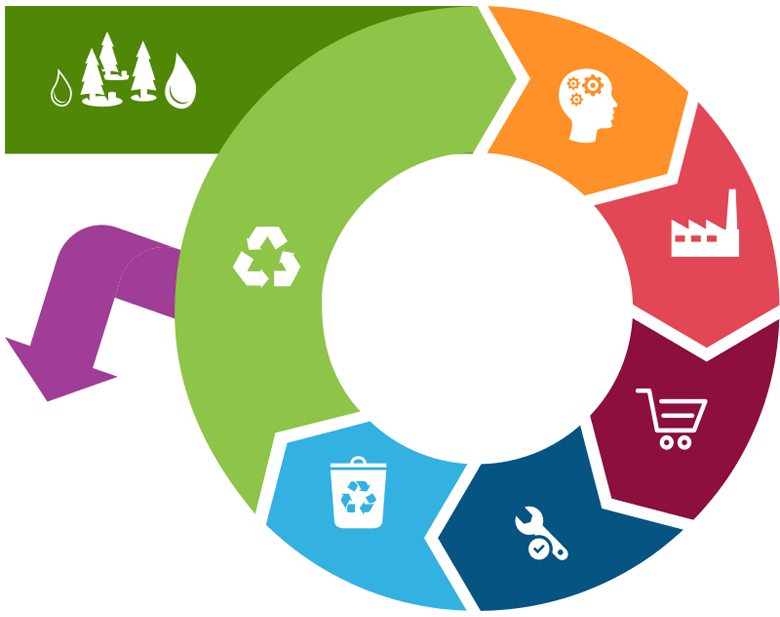
From an industry perspective, the circular economy can be implemented at all stages.
The first is design. This is the most important stage that sets the tone for the product's further life cycle. The basis is properly selected raw materials to manufacture components from which the product is made. Then a simple structure was created that allows individual assembly and disassembly of individual elements. This allows for reducing the volume of goods for transport and allows easy replacement of damaged elements by the end user. It extends the use of various consumer goods, allows for significant optimization of transport costs and the possibility of repair without unnecessary energy expenditure. The simplest example can be the use of high-quality plastics or metal alloys to produce gears that do not wear or break excessively quickly. And in case of damage, they are simple and cheap to replace.
Example of use: kitchen and garden equipment, toys.
In summary, design for recycling affects the correct selection of raw materials / components and the final performance of the product. This translates into the cost of dismantling and developing components that are ultimately waste. It is instead for simple and low-emission processing into new products.
The next step is production and distribution, which has the greatest environmental impact and determines the cost of products for the final consumer and the manufacturer's margin.
At this stage, the most important is to exclude or minimize the use of raw materials that are not recycled, reduce post-production waste and optimize energy use. People involved in the operation definitely pay attention to the level of participation of employees and equipment in this process. The sales value of waste raw materials has significantly decreased in recent years, with a simultaneous increase in labor costs and mixed waste management as well as those intended for full utilization. Therefore, it is crucial to thoroughly analyze those areas that are elements of the process necessary for the functioning of the company, and are still possible to optimize. The main points of generating costs associated with waste management in an enterprise are internal logistics, manual work, ergonomics, equipment and accessories, information flow, responding to new or crisis situations, the procedure and determining areas of responsibility of individual employees.
Example of use: delegation of duties, marking of positions, staff training, optimal use of equipment, working time.
The consumer area is the most demanding section where GOZ has the most difficult role to fulfill so that the whole idea can function.
The basis for the introduction of any system based on the common idea and value and wise management thereof is to understand the purpose and needs of necessary changes. Education becomes the most important then. All participants in a given process must know perfectly well what their role is and know the value of each stage of these activities. The correct presentation of the impact of individuals and the synergy effect of all participants in the process, e.g. employees of one company, can radically change the attitude of those people who, due to their misunderstanding of the basics, were unable to participate in the change.
It is very important to conduct well-prepared educational campaigns dedicated to all social and age groups. The basis is the use of verified sources of information, the best and latest practices used and experienced educators. Their role is to transfer knowledge so that the joint time of classes effectively translates into further behavior of the students and valuable use of acquired knowledge.
Sweden is the best example in this area. Long-term ecological education and related consumer awareness acquired in this country translates into achieving almost 99% of waste recovery. Almost 50 years Swedes learn how and why you should care for the environment. A wide-ranging social campaign translates into measurable effects that are a role model for all of us.
The Swedish Återvinningscentral, or local recycling centers, are a permanent infrastructure element for each municipality. All its residents have free and free access to such a point. Happy weekend family visits are not surprising in such places. There is no waste that the station cannot accept from a private user. Others, i.e. entrepreneurs, are provided with advice and a dedicated collection service for the waste they generate at the highest level available. Waste brought to the recycling station is also collected, but for a fee at agreed rates. All such activities are associated with the constant elimination of undesirable environmental impact by all waste producers.
In summary, a well-educated society consciously chooses products that can be easily dismantled after the end of their operation, and the resulting waste recycled. The same applies to entrepreneurs who, when launching their products, care for their quality and environmental impact at every stage of the product's life cycle.